
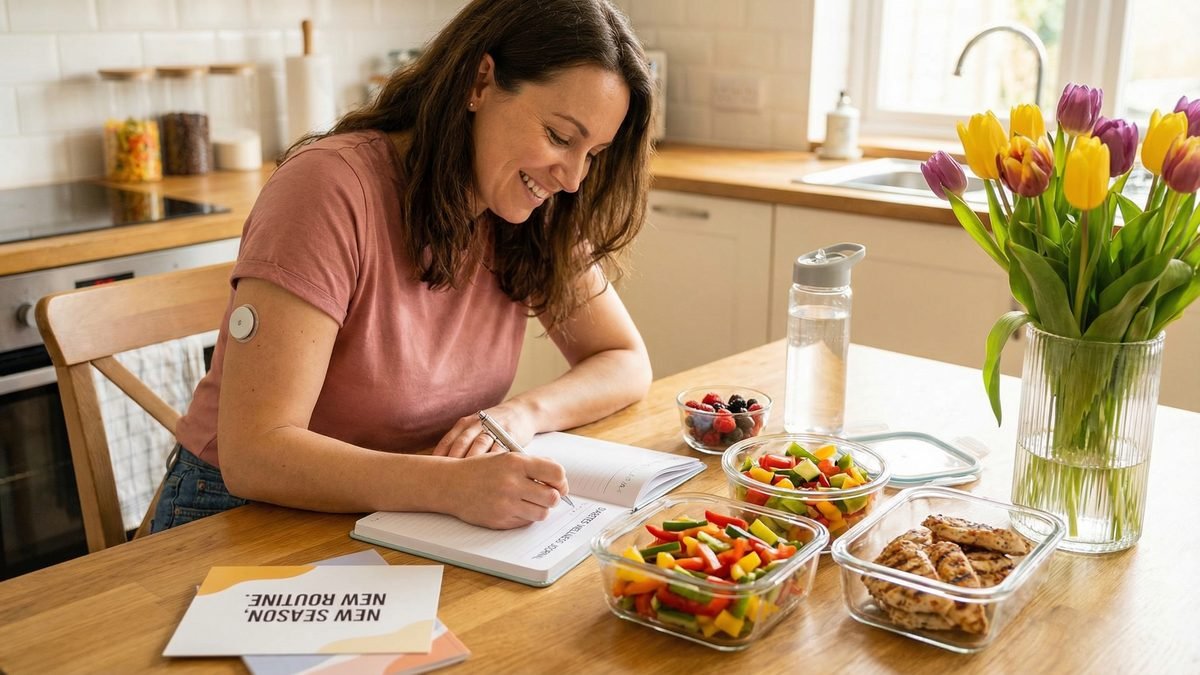
Spring is a natural reset point. The longer days, warmer temperatures, and sense of renewal that come with the season offer a genuine opportunity to refresh your approach to diabetes management. Here is how to use the season to your advantage.
Why Spring Is a Natural Reset
Winter often brings a cluster of diabetes management challenges: reduced physical activity, heavier comfort foods, disrupted sleep from shorter days, and the psychological weight of months of cold and grey. By the time spring arrives, many people with diabetes find their routines have drifted from where they want them to be.
This is not a failure — it is a predictable seasonal pattern. The important thing is to recognise it and use the energy and optimism of spring to recalibrate. Research on behaviour change consistently shows that fresh starts — new seasons, new months, new weeks — are psychologically powerful moments for initiating positive change.
Five Areas to Refresh This Spring
1. Your Physical Activity Routine
Winter exercise often defaults to indoor activities or, for many people, no exercise at all. Spring opens up a world of outdoor options: walking, cycling, gardening, outdoor swimming. Even a 20-minute daily walk has been shown to improve insulin sensitivity and reduce HbA1c. Start small and build gradually — the goal is consistency, not intensity.
2. Your Eating Patterns
Spring brings a new wave of seasonal produce: asparagus, radishes, peas, broad beans, spring onions, watercress. These vegetables are low in carbohydrates, rich in fibre and micronutrients, and ideal for blood sugar management. Use the season as an opportunity to introduce more variety into your diet and reduce reliance on the heavier, starchier foods of winter.
3. Your Monitoring Habits
If you have been less diligent about blood glucose monitoring over winter, spring is a good time to re-engage. Review your CGM data or blood glucose logs and identify patterns. Are there consistent highs after certain meals? Unexplained lows at particular times of day? Spring is also a good time to book your annual diabetes review if you have not done so recently.
Blood glucose levels often improve naturally in spring and summer due to increased physical activity, more vitamin D from sunlight, and lighter eating patterns. If you use insulin, be aware that your doses may need to be adjusted downward as the season changes. Monitor more frequently during seasonal transitions.
4. Your Medication and Supply Organisation
Spring is an ideal time to audit your diabetes supplies. Check expiry dates on insulin, test strips, and lancets. Review your prescription to ensure you have adequate supplies. If you have been meaning to discuss a medication change or new technology with your diabetes team, book that appointment now.
5. Your Mental Approach
Diabetes management is as much a psychological challenge as a physical one. If you have been experiencing diabetes burnout — the exhaustion and disengagement that comes from the relentless demands of the condition — spring is a good time to seek support. This might mean talking to your diabetes nurse, joining a peer support group, or simply acknowledging that managing a chronic condition is genuinely hard and that it is acceptable to ask for help.
Setting Spring Goals That Stick
The most effective goals are specific, measurable, and small enough to be achievable. Rather than “I will exercise more,” try “I will walk for 20 minutes after dinner on Monday, Wednesday, and Friday.” Rather than “I will eat better,” try “I will add one serving of vegetables to my lunch every day this week.”
Small wins build momentum. Each successful day reinforces the identity of someone who manages their diabetes well, making the next day’s choices easier.
Spring offers a genuine psychological and practical opportunity to refresh your diabetes management routine. Focus on one or two areas — perhaps outdoor activity and seasonal eating — and build from there. Small, consistent changes compound over time into significant improvements in blood glucose control, energy, and wellbeing.

 English
  Arabic
  Spanish
  Urdu
Urdu