See also: Diabetes Complications: Heart, Kidney, Eye, and Foot Health — our complete pillar guide.
Your kidneys are among the hardest-working organs in your body, filtering around 200 litres of blood every single day. For people with diabetes, persistently high blood sugar is the single greatest threat to these remarkable filters. Understanding exactly how this damage occurs is the first step in preventing it.
The Kidneys: Your Body’s Filtration System
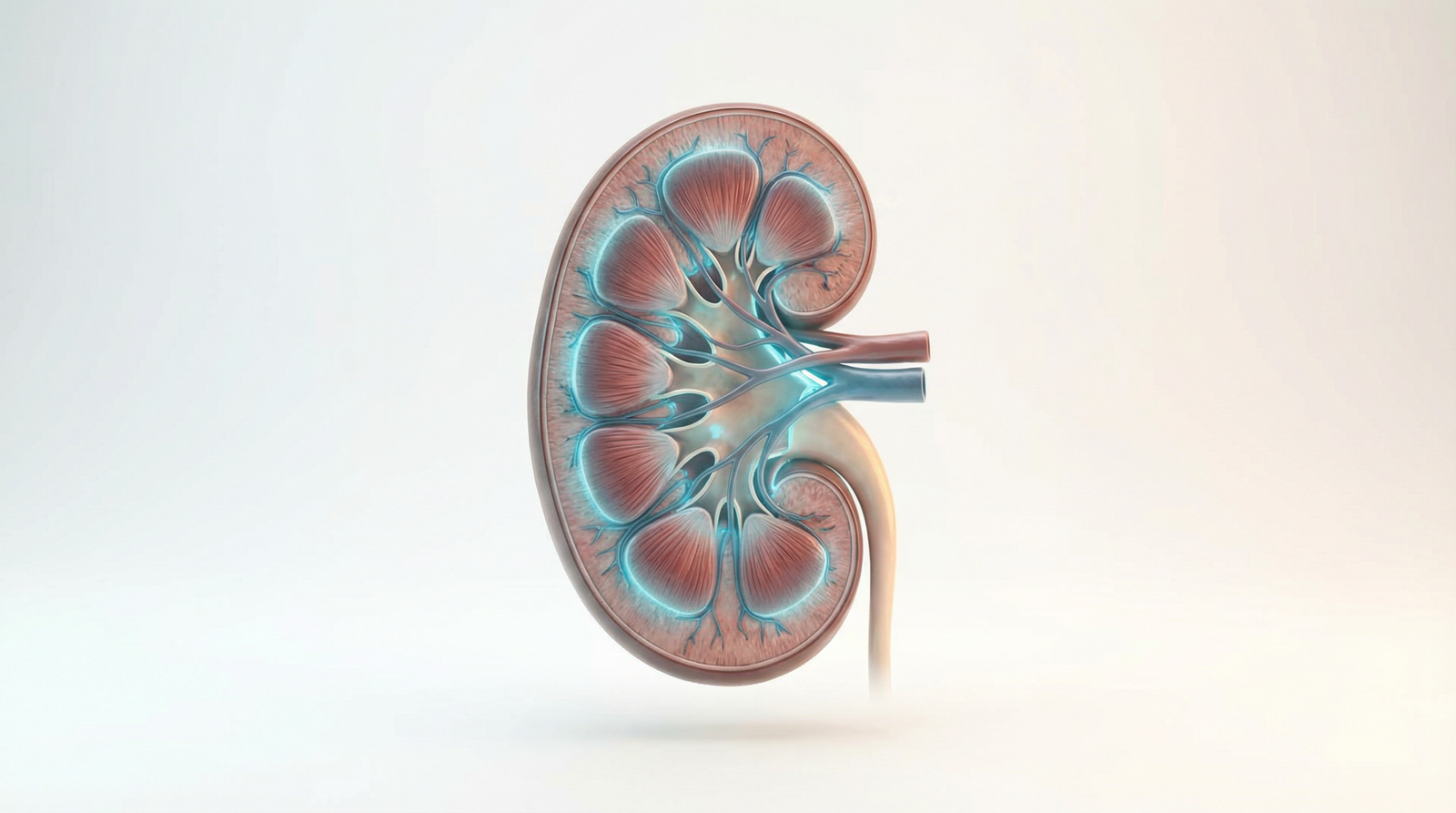
Each kidney contains approximately one million tiny filtering units called nephrons. At the heart of each nephron sits a microscopic cluster of blood vessels called the glomerulus. Blood is pushed through these vessels under pressure, and the glomerulus acts as a sieve, allowing waste products and excess fluid to pass through while retaining proteins and blood cells.
This elegant system works flawlessly under normal conditions. But when blood glucose is persistently elevated, a cascade of damaging processes begins to unfold within these delicate structures.
The Mechanisms of Kidney Damage
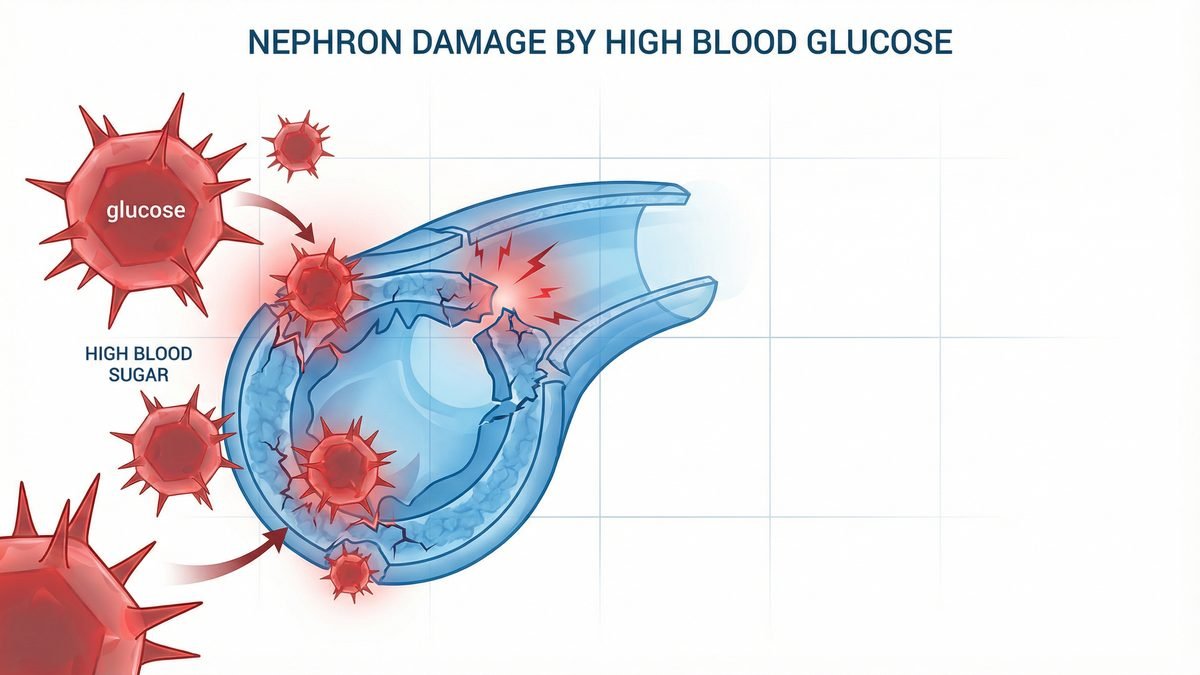
High blood sugar damages the kidneys through several interconnected pathways. The first and most immediate is hyperfiltration. When glucose levels are elevated, the kidneys attempt to compensate by increasing blood flow and filtration pressure. This extra workload, sustained over months and years, physically stretches and damages the glomerular walls.
Simultaneously, excess glucose undergoes a chemical reaction with proteins throughout the body in a process called glycation. The resulting compounds, known as advanced glycation end-products (AGEs), accumulate in the kidney’s basement membrane, thickening and stiffening the filtration barrier. Over time, this thickening impairs the kidney’s ability to filter effectively.
High blood sugar also triggers oxidative stress and chronic inflammation within kidney tissue. Free radicals damage the cells lining the nephrons, while inflammatory signals cause scarring (fibrosis) that progressively replaces healthy tissue with non-functional scar tissue.
The kidneys have significant reserve capacity. By the time symptoms appear, up to 90% of kidney function may already be lost. This is why regular monitoring through urine albumin and eGFR tests is so critical — damage can be detected and halted long before symptoms develop.
The Stages of Diabetic Kidney Disease
Diabetic kidney disease (diabetic nephropathy) progresses through five recognised stages, defined by the estimated glomerular filtration rate (eGFR) — a measure of how efficiently the kidneys are filtering blood.
| Stage | eGFR (mL/min) | Description |
|---|---|---|
| 1 | >90 | Normal function; kidney damage present but filtration intact |
| 2 | 60–89 | Mildly reduced function; often no symptoms |
| 3 | 30–59 | Moderately reduced function; fatigue and fluid retention may appear |
| 4 | 15–29 | Severely reduced function; preparation for kidney replacement therapy begins |
| 5 | <15 | Kidney failure; dialysis or transplant required |
The Role of Blood Pressure
High blood sugar rarely acts alone. Hypertension is both a consequence and an accelerant of diabetic kidney disease. As the kidneys become damaged, they lose their ability to regulate blood pressure effectively, creating a vicious cycle. Elevated blood pressure increases the physical stress on glomerular walls, accelerating the damage that high glucose has already initiated.
This is why blood pressure control is considered equally important to glucose management in protecting kidney health. Guidelines recommend a target blood pressure below 130/80 mmHg for most people with diabetes and kidney disease.
What You Can Do to Protect Your Kidneys
The evidence for prevention and slowing progression is compelling. The most powerful interventions are:
- Optimise blood glucose control: Every 1% reduction in HbA1c reduces the risk of microvascular complications, including kidney disease, by approximately 37%.
- Control blood pressure rigorously: ACE inhibitors and ARBs are the preferred agents as they have direct kidney-protective effects beyond blood pressure lowering.
- Use kidney-protective medications: SGLT2 inhibitors (empagliflozin, dapagliflozin, canagliflozin) and finerenone have demonstrated significant reductions in kidney disease progression in clinical trials.
- Reduce dietary protein if advised: In advanced kidney disease, a modest reduction in protein intake can reduce the filtration burden on damaged nephrons.
- Attend regular kidney function monitoring: Annual urine albumin-to-creatinine ratio (UACR) and eGFR testing allows early detection and intervention.
High blood sugar damages the kidneys through hyperfiltration, glycation, oxidative stress, and inflammation. The damage is silent and progressive, but it is also largely preventable. Tight glucose control, blood pressure management, and kidney-protective medications can dramatically slow or halt the progression of diabetic kidney disease. Annual kidney function tests are non-negotiable.
 English
  Arabic
  Spanish
  Urdu
Urdu