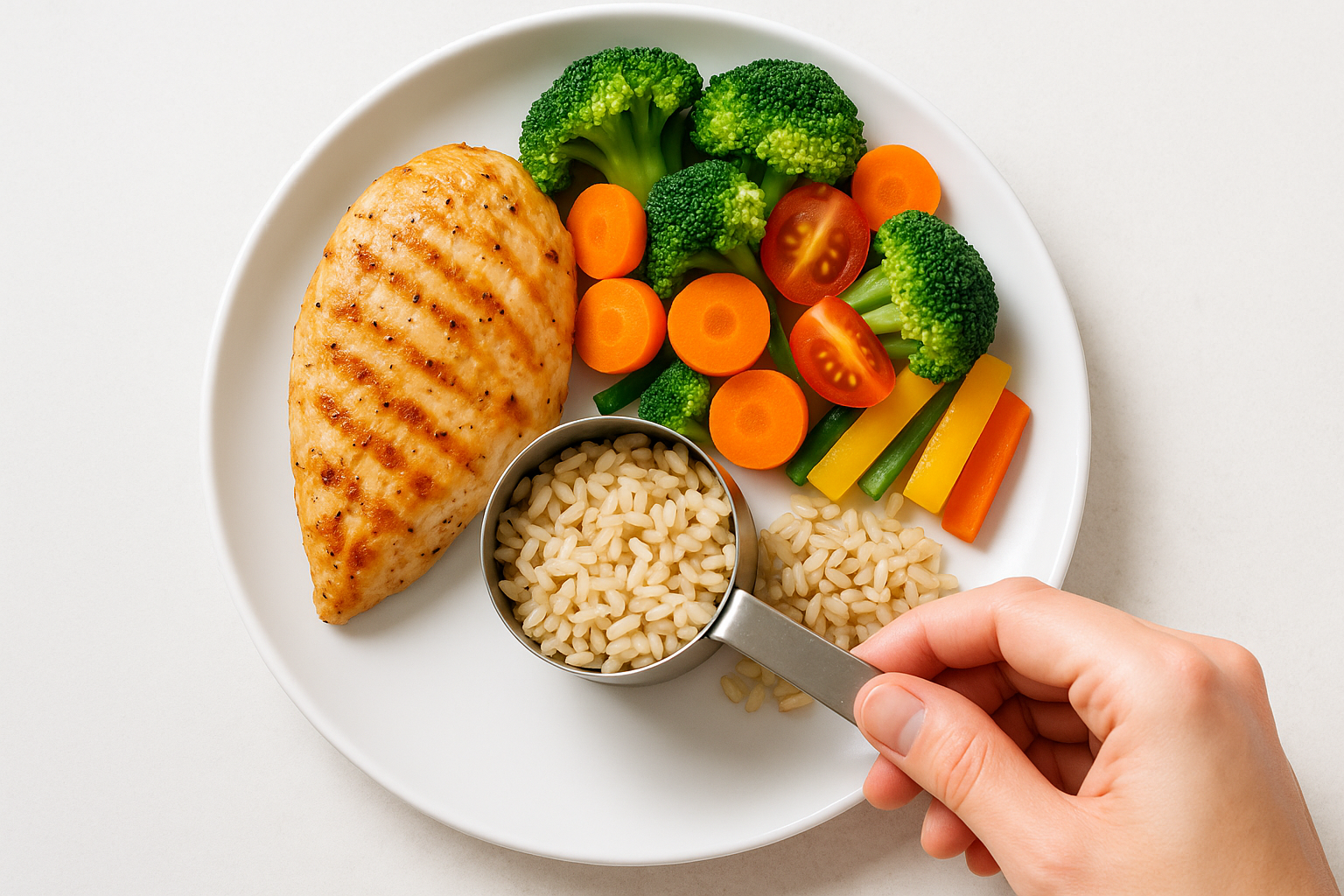
Portion Control and Carb Counting: A Visual Guide
You’re making great progress! You know what carbs are and how to read food labels. Now, let’s tackle the real-world challenge: how do you count carbs when there’s no label, like at a restaurant or when cooking from scratch? The answer is portion control. This visual guide will teach you how to estimate carb portions using your hands and everyday objects.

Using Your Hands to Estimate Portions
Your hands are a convenient, portable measuring tool. Here are some common hand-based estimates for carb-containing foods: [1]
- One Cupped Hand: A handful of snacks like pretzels or chips is roughly 1 ounce, which is about 15 grams of carbs.
- Your Fist: A closed fist is about the size of 1 cup. This is a good way to measure a serving of rice, pasta, or starchy vegetables, which is typically 30-45 grams of carbs.
- Your Thumb: The tip of your thumb is about 1 tablespoon. This is useful for measuring things like salad dressing or peanut butter.
Visualizing Common Carb Portions
Here are some other easy ways to visualize a 15-gram serving of carbohydrates: [2]
- 1 slice of bread
- 1/3 cup of cooked rice or pasta
- 1/2 cup of starchy vegetables (like potatoes, corn, or peas)
- A small piece of fruit (about the size of a tennis ball)
- 1/2 cup of fruit juice
The Plate Method: A Simple Framework for Balanced Meals
The plate method is a fantastic way to build a healthy, balanced meal without getting bogged down in numbers. Here’s how it works: [3]
- Fill Half Your Plate with Non-Starchy Vegetables: Think broccoli, salad greens, bell peppers, and green beans. These are low in carbs and high in nutrients.
- Fill One Quarter of Your Plate with Lean Protein: This includes chicken, fish, beans, or tofu.
- Fill the Final Quarter of Your Plate with Carbohydrate Foods: This is where your grains, starchy vegetables, or fruit go.
By following this method, you’ll naturally keep your carb portions in check while ensuring you get a good balance of all the food groups.
Tips for Eating Out
Counting carbs at restaurants can be tricky, but it’s not impossible. Here are a few tips:
- Look Up Nutrition Information Online: Many chain restaurants post their nutrition information on their websites.
- Ask for Sauces and Dressings on the Side: This gives you more control over how much you use.
- Use the Plate Method: Even if you can’t know the exact carb count, you can still build a balanced plate.
- Don’t Be Afraid to Ask for Substitutions: For example, you could ask for a side salad instead of fries.
Mastering portion control is a game-changer for diabetes management. It gives you the freedom to eat a variety of foods while still keeping your blood sugar in your target range. Keep practicing, and soon it will become second nature.
 English
  Arabic
  Spanish
  Urdu
Urdu